
 Image 1 of 5
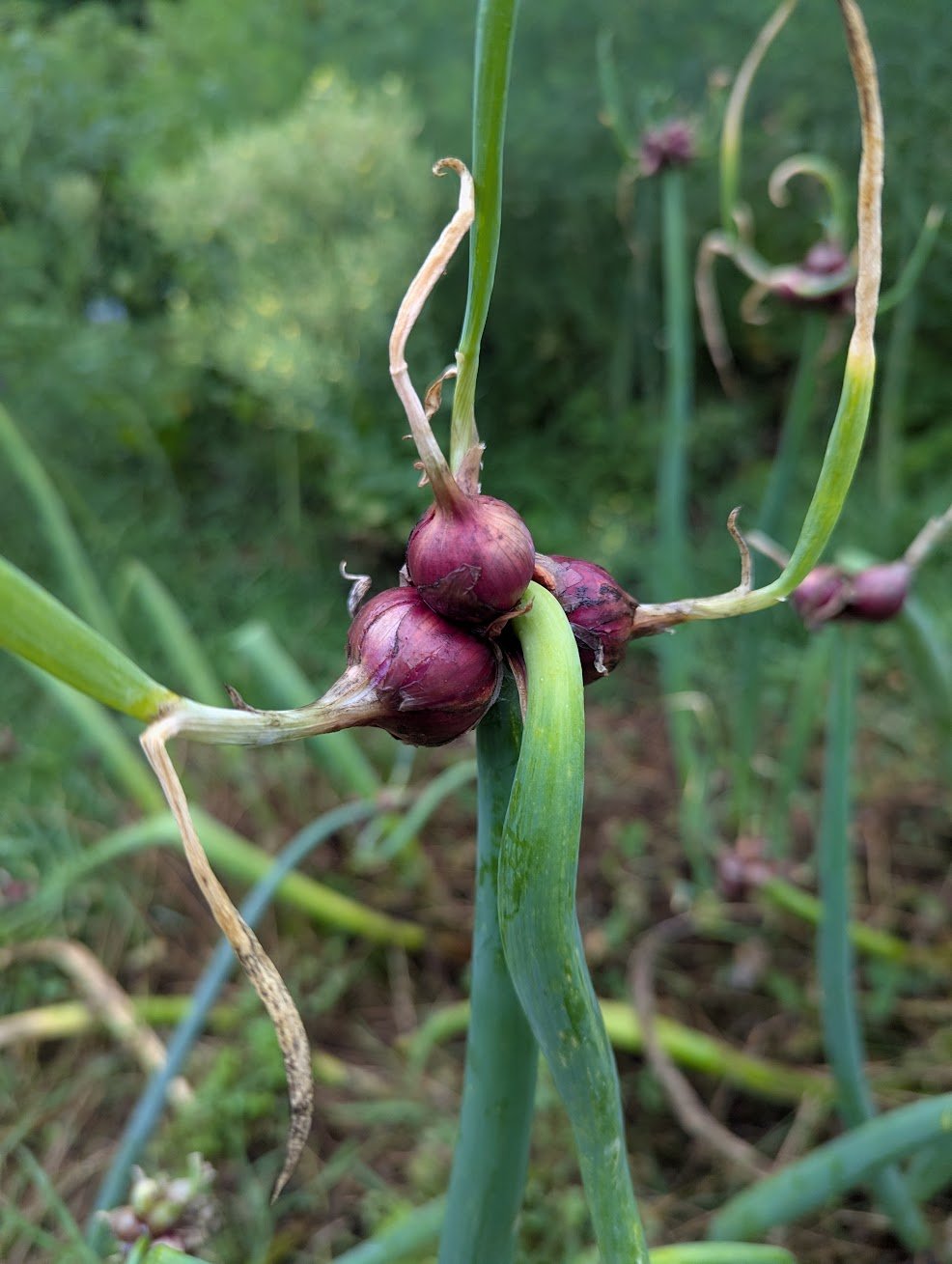 Image 2 of 5
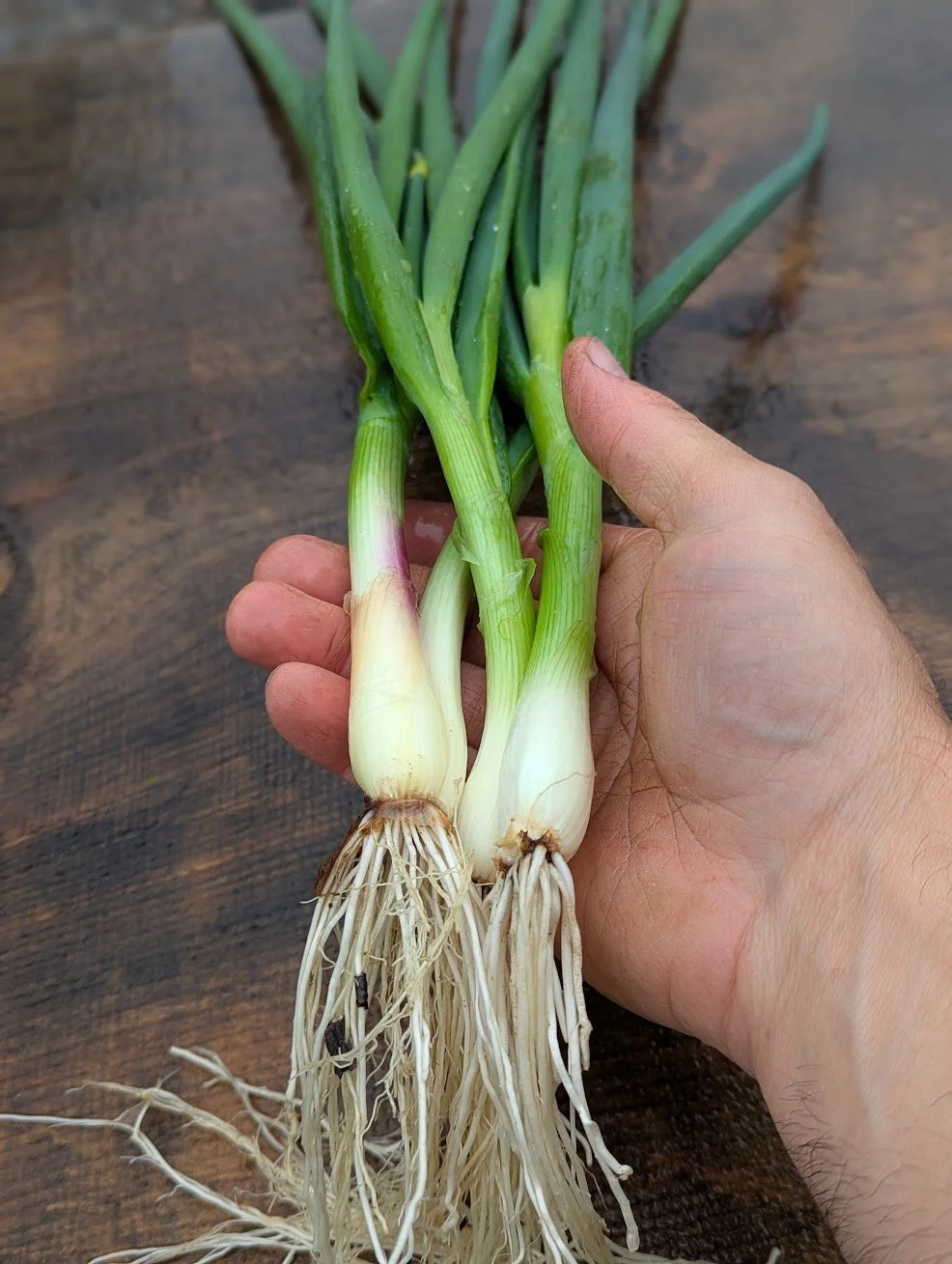 Image 3 of 5
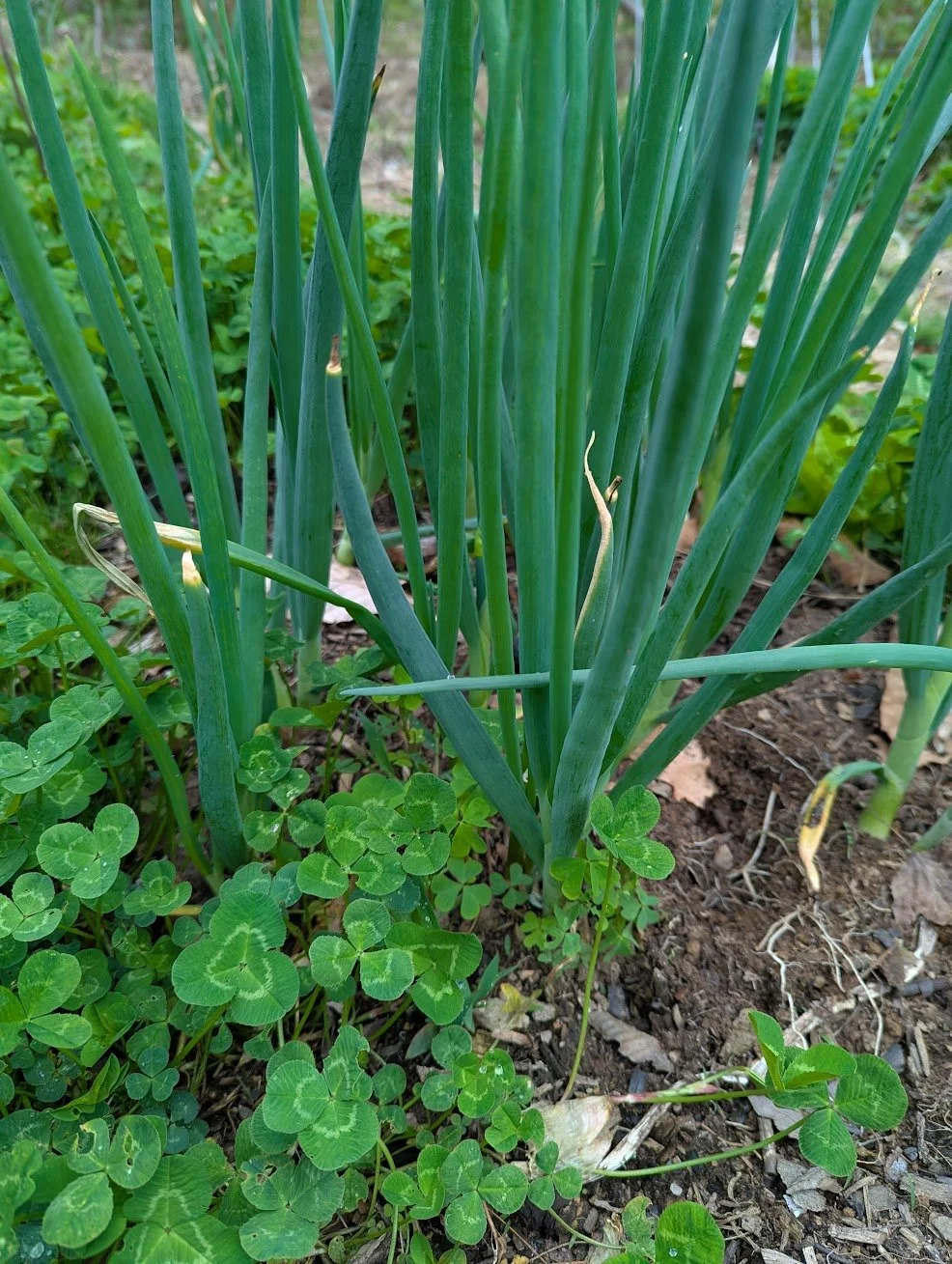 Image 4 of 5
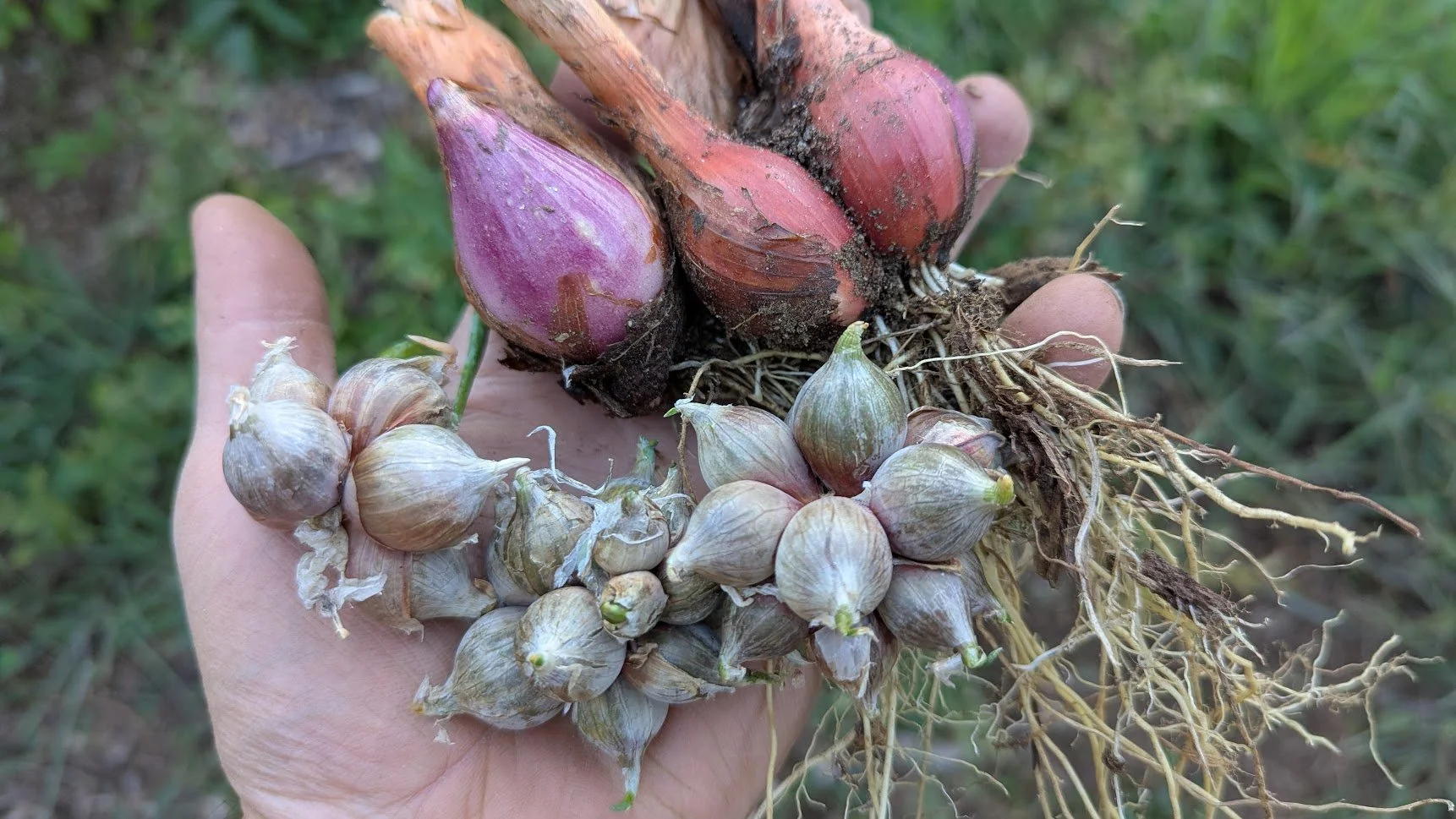 Image 5 of 5
A crop I have grown and loved for a very long time. Delicious and potent onion greens (tops) with a strong red onion flavor in the small to medium-sized bulbs. Just a few plants in only one year can give you enough bulbs to seed out an entire bed. Once established, with minimal care, you will never be without onions again.
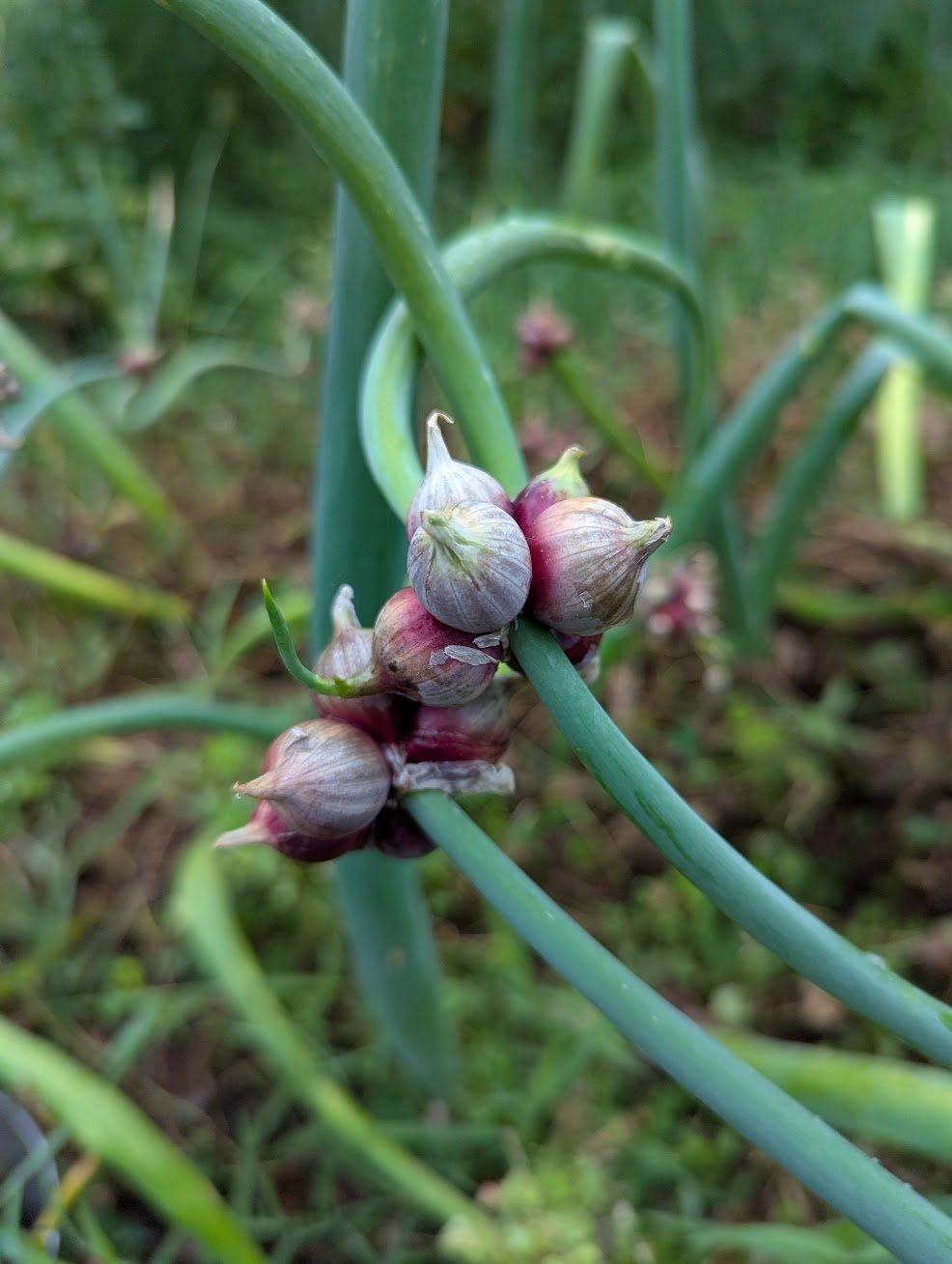
Egyptian walking onions (Allium × proliferum) are a perennial onion variety known for their unique propagation method. Unlike traditional onions, they form clusters of small bulbils at the top of their flower stalks. These bulbils eventually become heavy, causing the stalks to bend and touch the ground, where the bulbils take root and form new plants. This "walking" propagation allows the plant to spread efficiently. The plant is hardy and can thrive in various climates, producing both edible bulbs and greens.
Planting is very simple:
If you order bulbs, split them from the head until you have the small individual cloves. Push them into loose, fertile soil about 1/2" below the surface and lightly cover.
If you order live plants, simply replant the rooted bulb back into the ground with the green tops above ground.
Growing Requirements:
Full to 3/4 sun
Soil pH: 6.0 – 7.0
Plant bulbs 1" deep
For best growth, they prefer richer soil with high organic matter. If you have hard-pan clay soils, fork the soil to cause breaks in the hard-pan. The looser, the better.
Live plants are 6–12 inches tall and should be planted immediately in soil, just below where the stalks turn green.
Bulbs can be planted within one month and should be planted approximately ½ inch deep, with the pointy side facing up if distinguishable.
A crop I have grown and loved for a very long time. Delicious and potent onion greens (tops) with a strong red onion flavor in the small to medium-sized bulbs. Just a few plants in only one year can give you enough bulbs to seed out an entire bed. Once established, with minimal care, you will never be without onions again.
Egyptian walking onions (Allium × proliferum) are a perennial onion variety known for their unique propagation method. Unlike traditional onions, they form clusters of small bulbils at the top of their flower stalks. These bulbils eventually become heavy, causing the stalks to bend and touch the ground, where the bulbils take root and form new plants. This "walking" propagation allows the plant to spread efficiently. The plant is hardy and can thrive in various climates, producing both edible bulbs and greens.
Planting is very simple:
If you order bulbs, split them from the head until you have the small individual cloves. Push them into loose, fertile soil about 1/2" below the surface and lightly cover.
If you order live plants, simply replant the rooted bulb back into the ground with the green tops above ground.
Growing Requirements:
Full to 3/4 sun
Soil pH: 6.0 – 7.0
Plant bulbs 1" deep
For best growth, they prefer richer soil with high organic matter. If you have hard-pan clay soils, fork the soil to cause breaks in the hard-pan. The looser, the better.
Live plants are 6–12 inches tall and should be planted immediately in soil, just below where the stalks turn green.
Bulbs can be planted within one month and should be planted approximately ½ inch deep, with the pointy side facing up if distinguishable.