
 Image 1 of 3
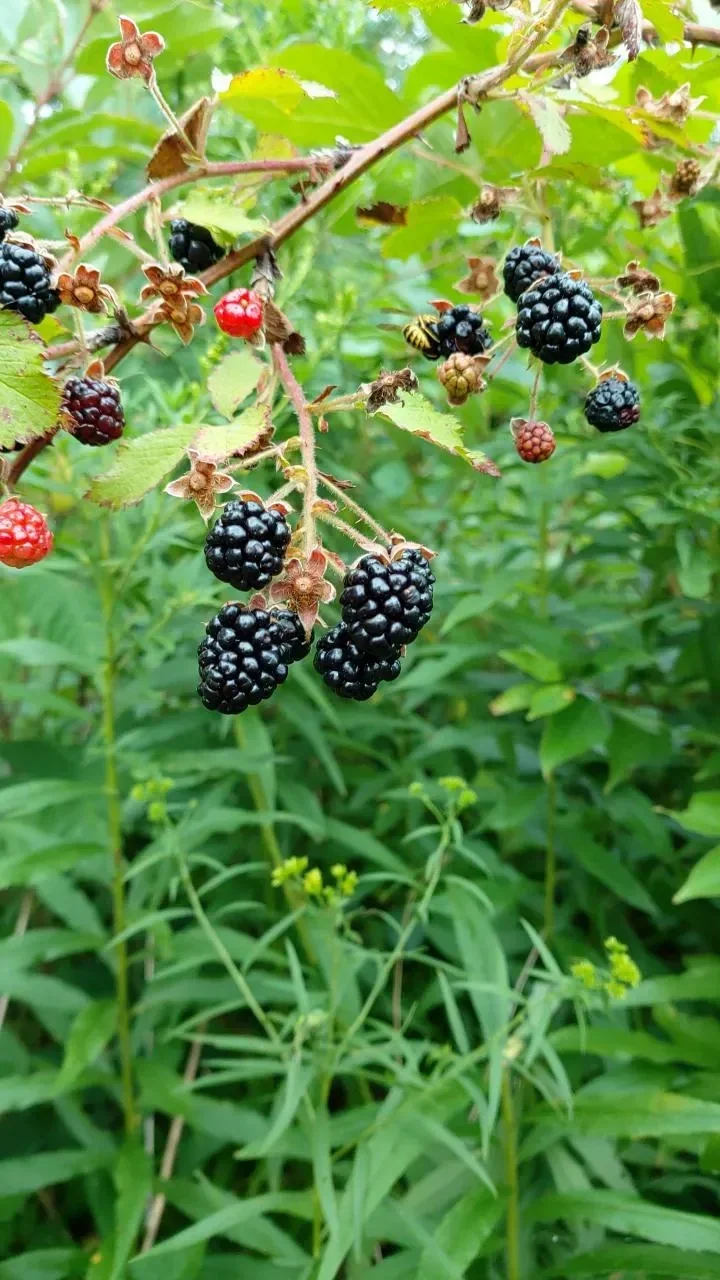 Image 2 of 3
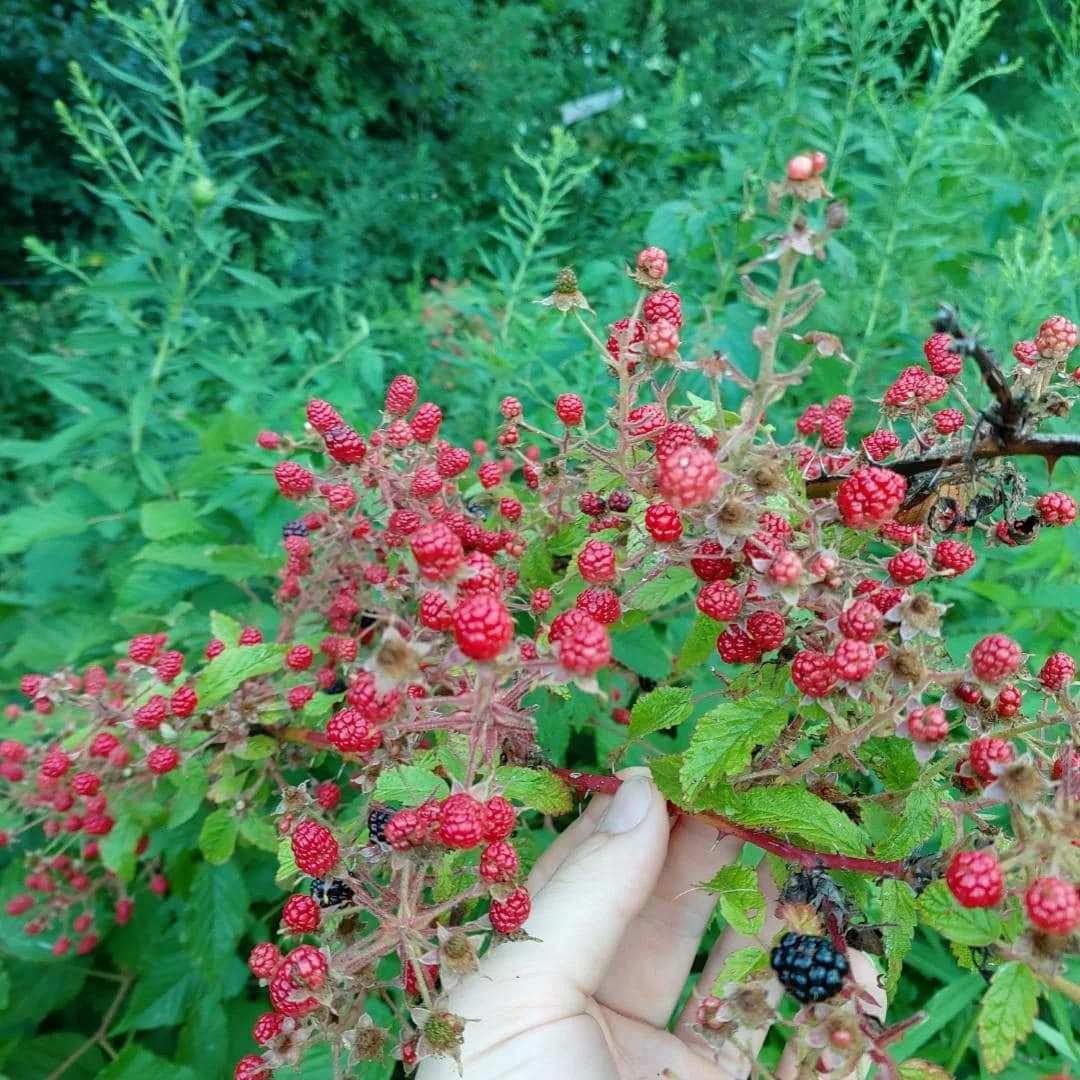 Image 3 of 3
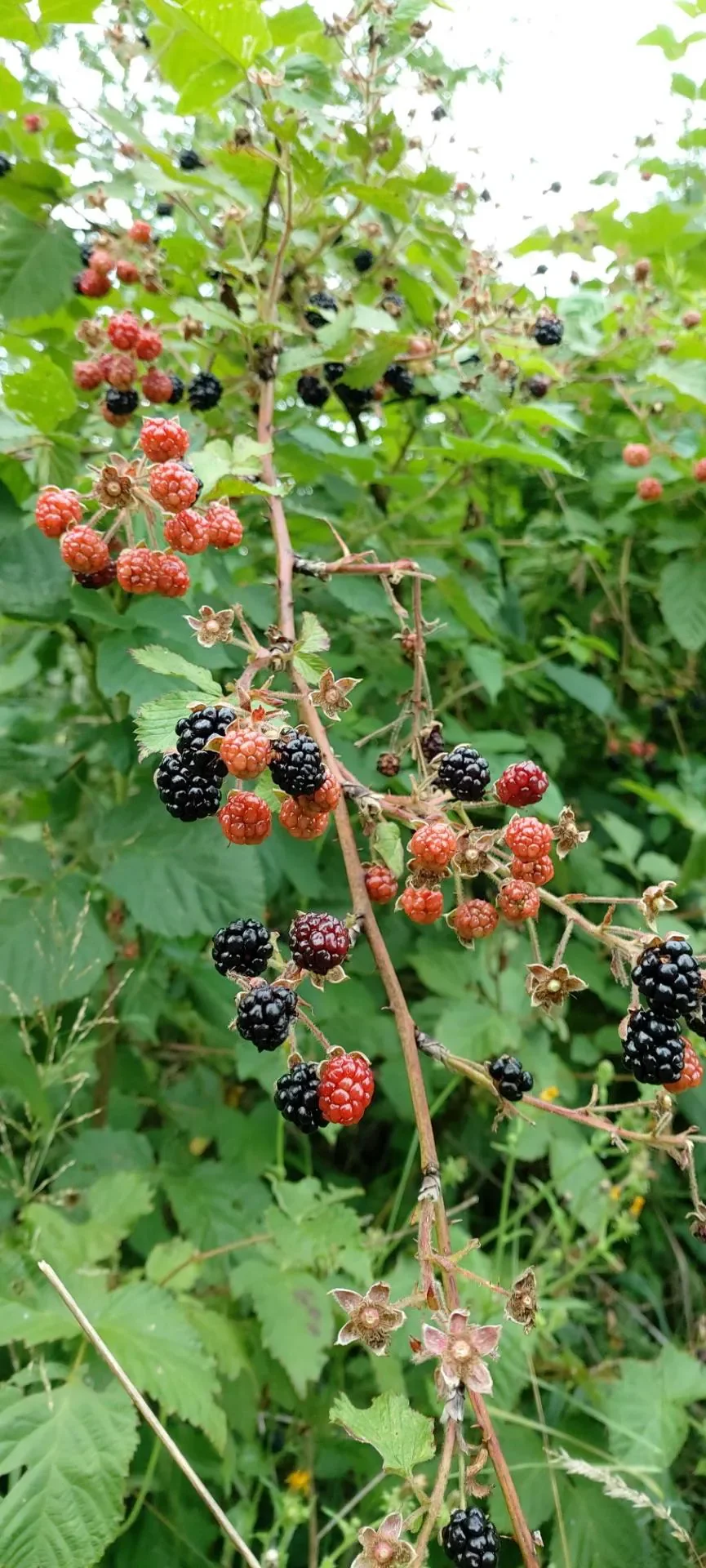
Allegheny blackberries (Rubus allegheniensis) are a native North American species of highbush blackberry, thriving in eastern and central regions with their erect, thorny canes that typically reach 3 to 6 feet tall and spread 6 to 12 feet wide. These deciduous shrubs feature dark green, compound leaves that turn vibrant shades of orange, purple, and red in fall, and produce clusters of sweet, juicy, deep-violet-to-black drupes in mid-summer after blooming with white, five-petaled flowers in late spring. Known for their adaptability to various soils—from rich loams to rocky or clay types—and tolerance of partial shade, they form dense thickets that colonize open areas. Growing Allegheny blackberries is appealing not only for their delicious, versatile fruit—perfect for eating fresh, baking, or preserving—but also for their ecological benefits, providing food and shelter for pollinators, birds, and mammals, enhancing biodiversity in your garden while offering a low-maintenance, wildlife-friendly addition.
Our favorite uses for these berries is to let them grow in places we neglect or would like to create a privacy screen or a deer screen. These will grow so densely that not even deer will attempt to cross through them. After the first year you can expect runners in every direction and for these to multiply at a incredible rate. Once they fully establish very few plants can truly compete with them. At one of our homesteads several years ago over 100lbs of berries had been harvested in a single week!
Your blackberries will come as bare root plants during the Dormancy (winter seasons) Or as Trimmed live plants during the growing season. You can plant them immediately. Replant them with the root buried to the pre-existing soil line. Which should be easily to identify.
Allegheny blackberries (Rubus allegheniensis) are a native North American species of highbush blackberry, thriving in eastern and central regions with their erect, thorny canes that typically reach 3 to 6 feet tall and spread 6 to 12 feet wide. These deciduous shrubs feature dark green, compound leaves that turn vibrant shades of orange, purple, and red in fall, and produce clusters of sweet, juicy, deep-violet-to-black drupes in mid-summer after blooming with white, five-petaled flowers in late spring. Known for their adaptability to various soils—from rich loams to rocky or clay types—and tolerance of partial shade, they form dense thickets that colonize open areas. Growing Allegheny blackberries is appealing not only for their delicious, versatile fruit—perfect for eating fresh, baking, or preserving—but also for their ecological benefits, providing food and shelter for pollinators, birds, and mammals, enhancing biodiversity in your garden while offering a low-maintenance, wildlife-friendly addition.
Our favorite uses for these berries is to let them grow in places we neglect or would like to create a privacy screen or a deer screen. These will grow so densely that not even deer will attempt to cross through them. After the first year you can expect runners in every direction and for these to multiply at a incredible rate. Once they fully establish very few plants can truly compete with them. At one of our homesteads several years ago over 100lbs of berries had been harvested in a single week!
Your blackberries will come as bare root plants during the Dormancy (winter seasons) Or as Trimmed live plants during the growing season. You can plant them immediately. Replant them with the root buried to the pre-existing soil line. Which should be easily to identify.