
 Image 1 of 5
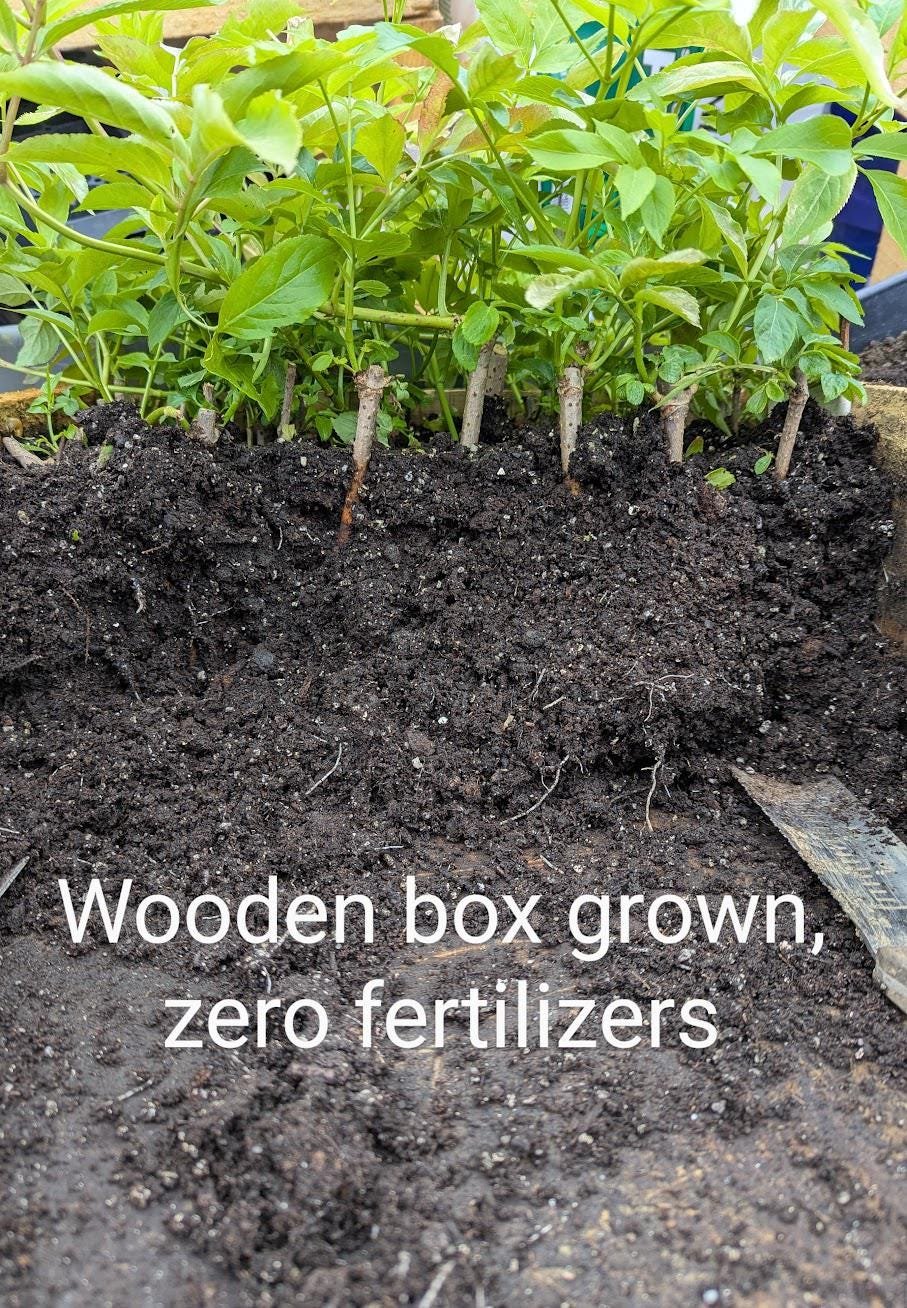 Image 2 of 5
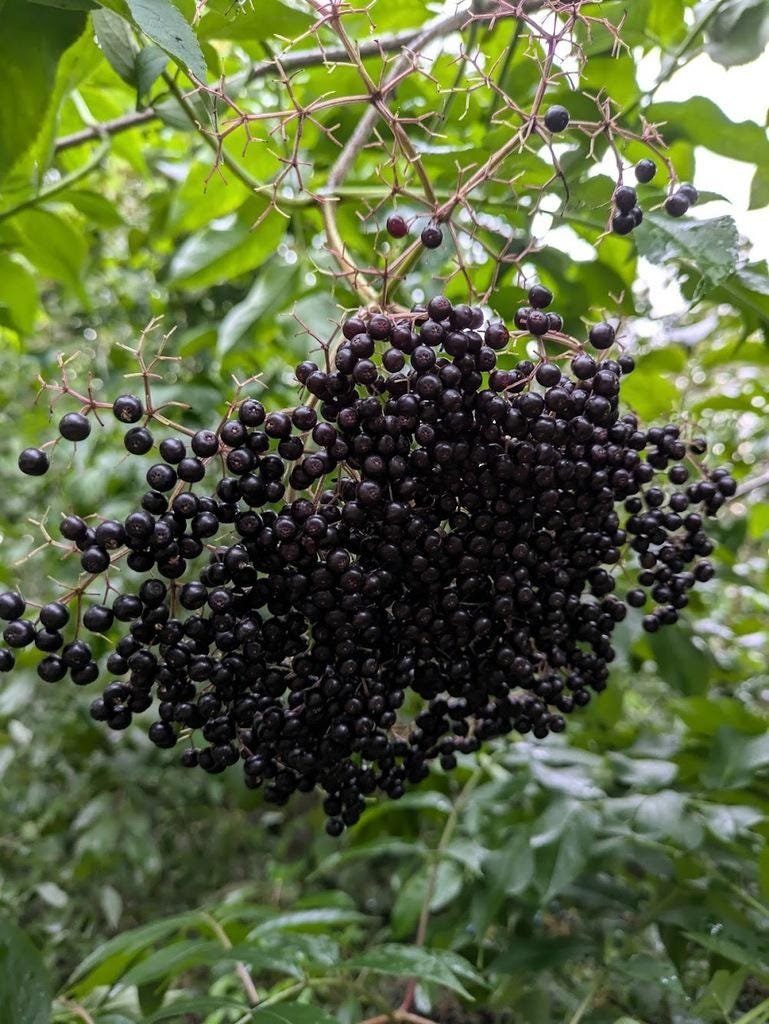 Image 3 of 5
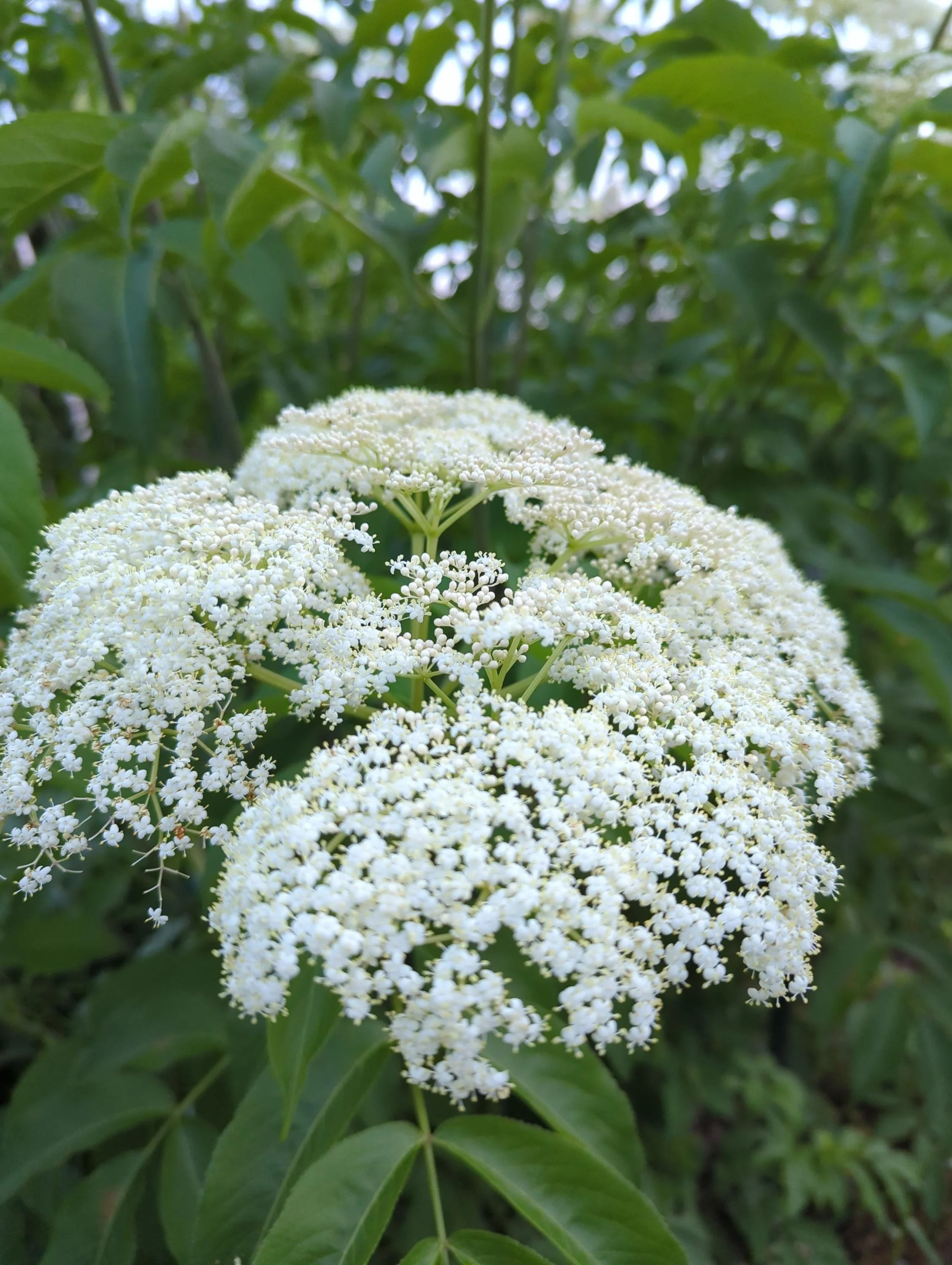 Image 4 of 5
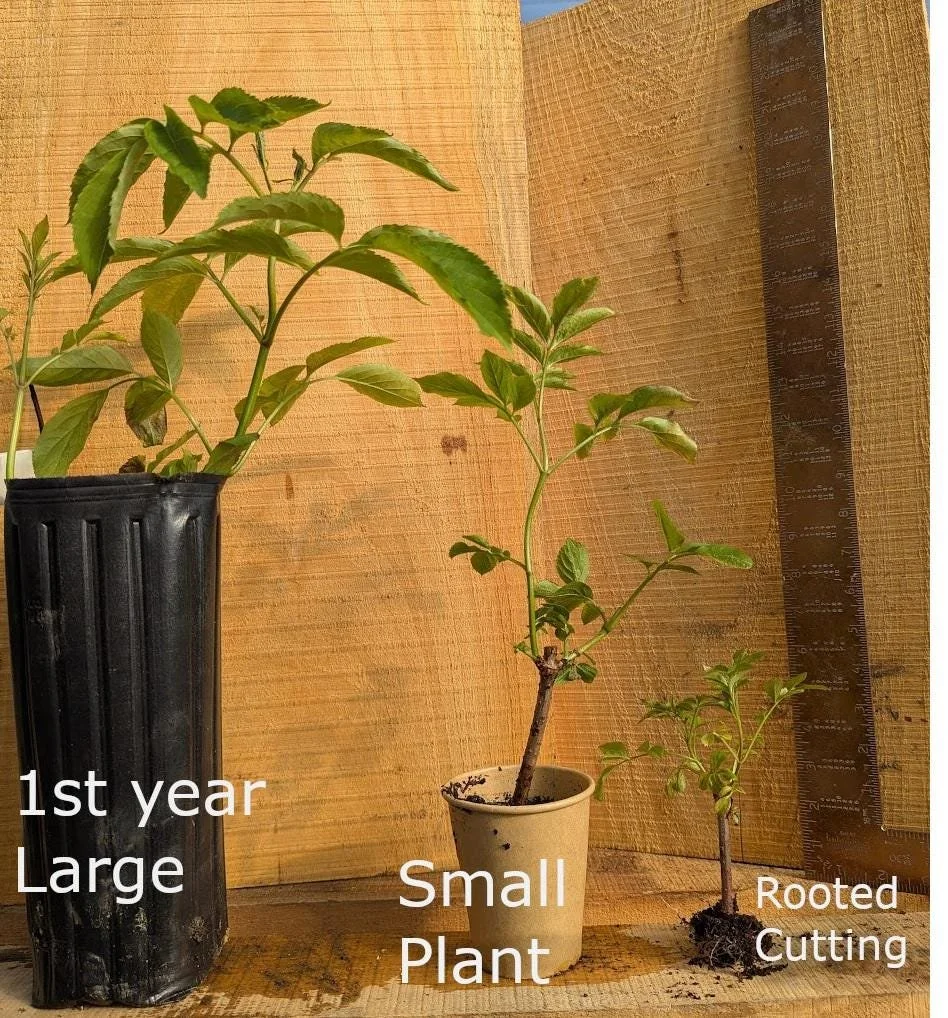 Image 5 of 5
[Fall Nursery Update]
The first frost arrived late this year, but our plants are now dormant and ready to ship bare root! They’re strong, healthy, and ready for planting.
Marge Elderberry
Marge Elderberry (Sambucus canadensis ‘Marge’) is a distinguished cultivar renowned for its exceptional cold hardiness, vigorous growth, and outstanding fruit production. This variety thrives in diverse climates, making it a top choice for growers seeking reliable harvests. It was named after Marge Millican (born 1927), associated with Wyldewood Cellars, who previously released the ‘Wyldewood’ American elderberry cultivar in 2010.
‘Marge’ is one of my favorite elderberry cultivars. Its berries are larger and notably sweeter than many others, offering a delightful flavor. The plant is visually striking, with remarkable growth potential, capable of reaching over 10 feet in a single season. ‘Marge’ fruits on second-year wood, so I follow a two-year pruning rotation once plants are fully mature. In the first year, I leave the plant undisturbed. In the second year (after full maturity), I selectively prune half of the first-year branches to the ground, targeting the smallest ones. The following year, I remove the now two-year-old canes and continue this alternating cycle, promoting vigorous new growth with abundant flowers and berries.
Plant Characteristics
Size: Typically grows 8–12 feet tall and wide, depending on growing conditions.
Hardiness Zone: USDA Zones 3–9.
Pollination: Self-pollinating, but benefits from cross-pollination for enhanced yields.
Growing Conditions
Light: Thrives in full sun to partial shade.
Soil: Adapts to various soil types but prefers moist, well-drained soil rich in organic matter.
pH: Favors slightly acidic to neutral soil (pH 5.5–7.0).
Water: Requires consistent moisture, especially during establishment and fruiting.
Propagation Options
**Standard Cuttings: Typically pinky- to thumb-thick and 6–14 inches long. These premium cuttings are ideal for reliable propagation. Their larger size allows direct planting into firm ground without tools.
**Bulk/Grade B Cuttings: A mix of larger and smaller cuttings, often with a single node. Cost-effective for establishing larger quantities, these are used for our own nursery stock propagation.
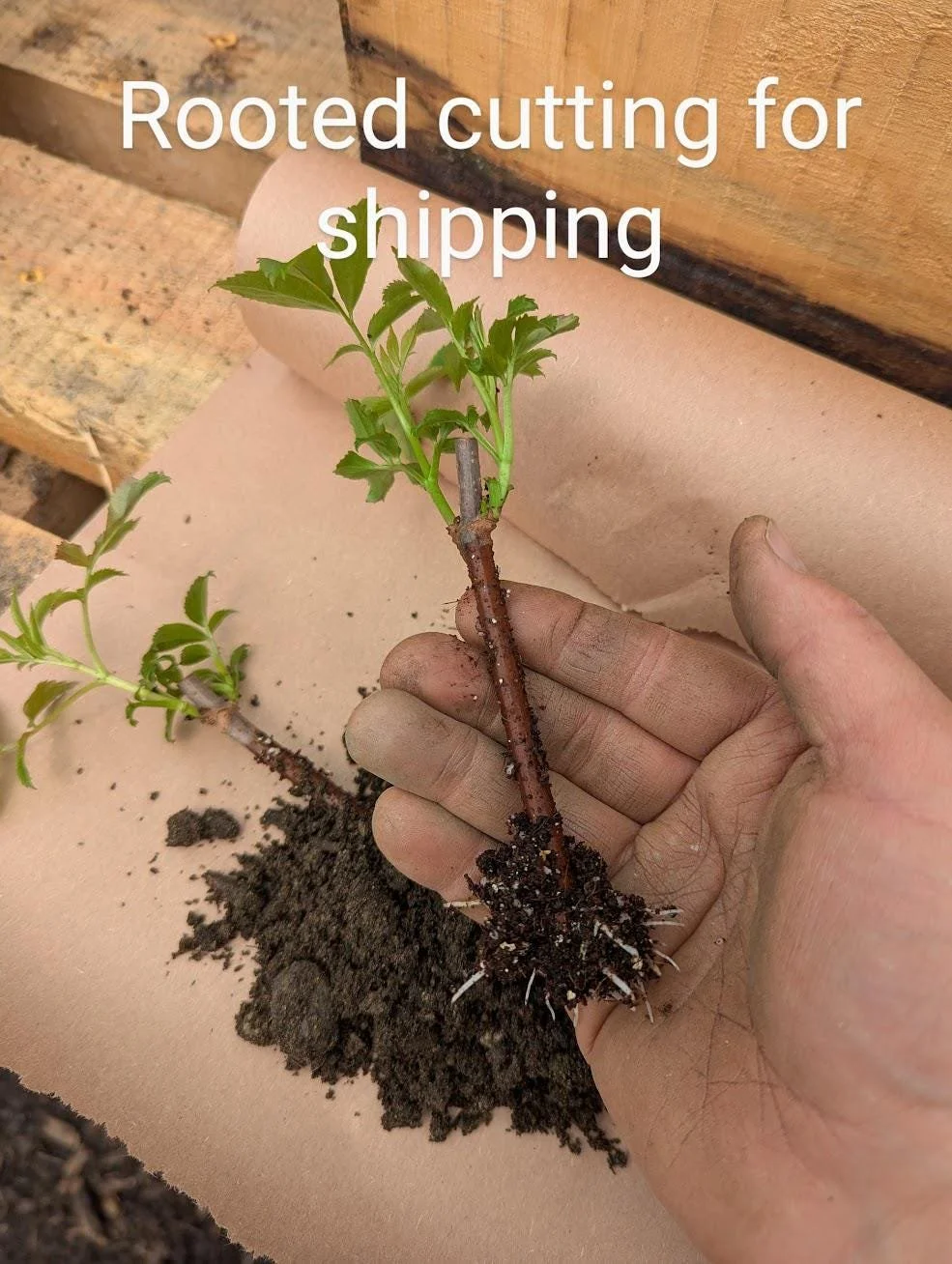
**Rooted Cuttings: Cuttings rooted in sterile soil, shipped in 2–3" paper pots/plugs. These grow quickly at this stage.
**First-Year Live Plants: Large, well-established first-year plants, typically in 3–4" deep pots. These plants, usually 1–2 feet tall, develop into large, semi-mature bushes by the next growing season.
**Bare Root plants have grown for a entire season, and are now dormant and perfect for fall/winter/early spring planting.
[Fall Nursery Update]
The first frost arrived late this year, but our plants are now dormant and ready to ship bare root! They’re strong, healthy, and ready for planting.
Marge Elderberry
Marge Elderberry (Sambucus canadensis ‘Marge’) is a distinguished cultivar renowned for its exceptional cold hardiness, vigorous growth, and outstanding fruit production. This variety thrives in diverse climates, making it a top choice for growers seeking reliable harvests. It was named after Marge Millican (born 1927), associated with Wyldewood Cellars, who previously released the ‘Wyldewood’ American elderberry cultivar in 2010.
‘Marge’ is one of my favorite elderberry cultivars. Its berries are larger and notably sweeter than many others, offering a delightful flavor. The plant is visually striking, with remarkable growth potential, capable of reaching over 10 feet in a single season. ‘Marge’ fruits on second-year wood, so I follow a two-year pruning rotation once plants are fully mature. In the first year, I leave the plant undisturbed. In the second year (after full maturity), I selectively prune half of the first-year branches to the ground, targeting the smallest ones. The following year, I remove the now two-year-old canes and continue this alternating cycle, promoting vigorous new growth with abundant flowers and berries.
Plant Characteristics
Size: Typically grows 8–12 feet tall and wide, depending on growing conditions.
Hardiness Zone: USDA Zones 3–9.
Pollination: Self-pollinating, but benefits from cross-pollination for enhanced yields.
Growing Conditions
Light: Thrives in full sun to partial shade.
Soil: Adapts to various soil types but prefers moist, well-drained soil rich in organic matter.
pH: Favors slightly acidic to neutral soil (pH 5.5–7.0).
Water: Requires consistent moisture, especially during establishment and fruiting.
Propagation Options
**Standard Cuttings: Typically pinky- to thumb-thick and 6–14 inches long. These premium cuttings are ideal for reliable propagation. Their larger size allows direct planting into firm ground without tools.
**Bulk/Grade B Cuttings: A mix of larger and smaller cuttings, often with a single node. Cost-effective for establishing larger quantities, these are used for our own nursery stock propagation.
**Rooted Cuttings: Cuttings rooted in sterile soil, shipped in 2–3" paper pots/plugs. These grow quickly at this stage.
**First-Year Live Plants: Large, well-established first-year plants, typically in 3–4" deep pots. These plants, usually 1–2 feet tall, develop into large, semi-mature bushes by the next growing season.
**Bare Root plants have grown for a entire season, and are now dormant and perfect for fall/winter/early spring planting.