Jerusalem Artichoke Tubers | Sunchoke Roots for Planting
from $16.00
sold out
2025 Harvest update: We had a extreme drought in the Northeast. The tuber sizes are smaller then average. So you will get more tubers per pound. And you will not need to cut them apart to spread them out like some prefer to do with the large tubers to try to increase the coverage.
Jerusalem artichoke (Helianthus tuberosus), also known as sunchoke, Is the definitive survival food in my opinion.
It is a perennial plant native to North America, grown for its edible, knobby tubers that resemble ginger root. Despite its name, it’s unrelated to artichokes and originates from the sunflower family, with tall stalks and yellow flowers that bloom in late summer. The tubers have a nutty, slightly sweet flavor and can be eaten raw, roasted, or boiled, offering a versatile addition to diets. Historically, Native Americans cultivated it before European settlers adopted it, and its ability to thrive in poor soils with minimal care makes it a low-maintenance crop for gardeners and farmers.
Planting Jerusalem artichokes is appealing due to their resilience, high nutritional value, and ecological benefits. They grow vigorously in USDA Zones 3–9, tolerate drought and frost, and require little to no care, making them ideal for sustainable/subsistence gardening. The plants attract pollinators and can act as a windbreak or erosion control. However, They will grow and spread aggressively once established, They will spread 2-4' per year. When I harvest I take all the large tubers from a location, this will miss more then enough to repopulate the whole area. These traits make them a valuable, hardy addition to a diverse homestead.
When establishing a new plot, I would use a rule of 5. If you plant 1 pound of tubers this year. You will have 5 pounds in the ground at the end of the growing season. If you did not harvest them, you would have 25lbs the following year and so on. So the amount you plant now will determine how quickly and how much you can harvest from your plot.
If your goal is to begin eating tubers this fall/winter I would plant several pounds now to make sure you have enough.
Your Tubers will be back in damp sawdust to keep them moist during transit!
2025 Harvest update: We had a extreme drought in the Northeast. The tuber sizes are smaller then average. So you will get more tubers per pound. And you will not need to cut them apart to spread them out like some prefer to do with the large tubers to try to increase the coverage.
Jerusalem artichoke (Helianthus tuberosus), also known as sunchoke, Is the definitive survival food in my opinion.
It is a perennial plant native to North America, grown for its edible, knobby tubers that resemble ginger root. Despite its name, it’s unrelated to artichokes and originates from the sunflower family, with tall stalks and yellow flowers that bloom in late summer. The tubers have a nutty, slightly sweet flavor and can be eaten raw, roasted, or boiled, offering a versatile addition to diets. Historically, Native Americans cultivated it before European settlers adopted it, and its ability to thrive in poor soils with minimal care makes it a low-maintenance crop for gardeners and farmers.
Planting Jerusalem artichokes is appealing due to their resilience, high nutritional value, and ecological benefits. They grow vigorously in USDA Zones 3–9, tolerate drought and frost, and require little to no care, making them ideal for sustainable/subsistence gardening. The plants attract pollinators and can act as a windbreak or erosion control. However, They will grow and spread aggressively once established, They will spread 2-4' per year. When I harvest I take all the large tubers from a location, this will miss more then enough to repopulate the whole area. These traits make them a valuable, hardy addition to a diverse homestead.
When establishing a new plot, I would use a rule of 5. If you plant 1 pound of tubers this year. You will have 5 pounds in the ground at the end of the growing season. If you did not harvest them, you would have 25lbs the following year and so on. So the amount you plant now will determine how quickly and how much you can harvest from your plot.
If your goal is to begin eating tubers this fall/winter I would plant several pounds now to make sure you have enough.
Your Tubers will be back in damp sawdust to keep them moist during transit!

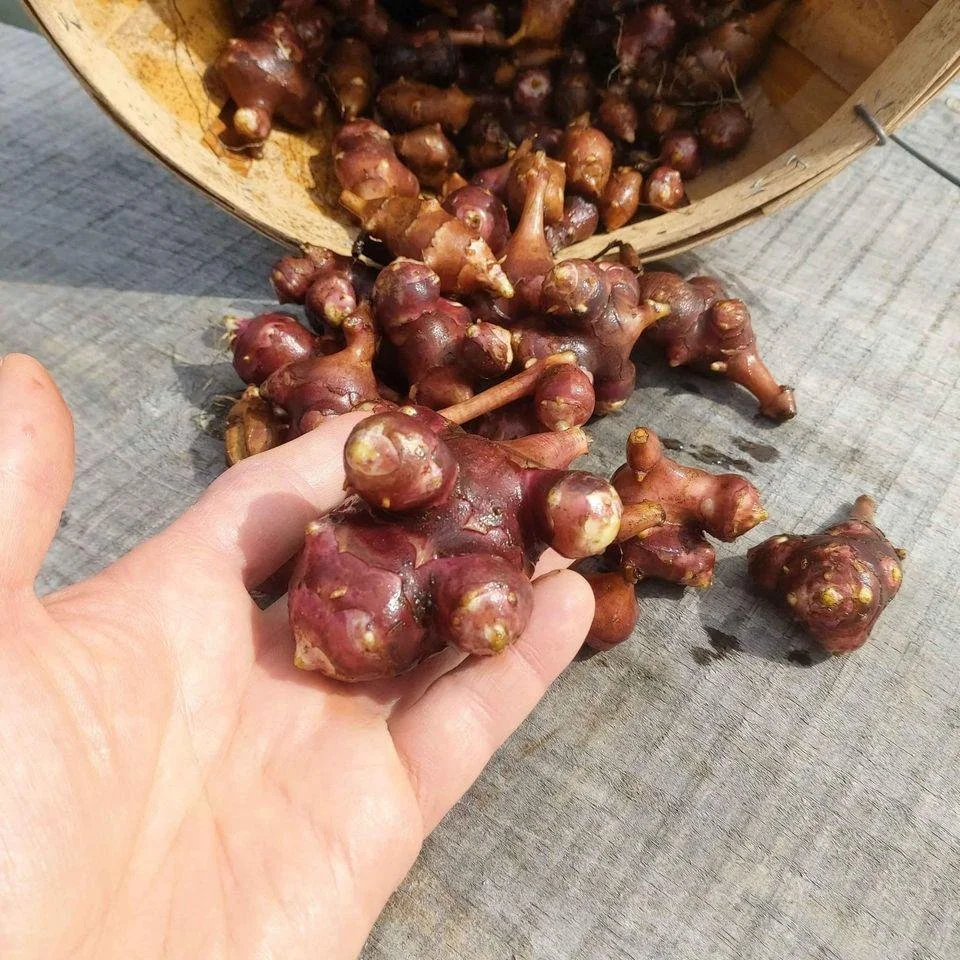 Image 1 of 3
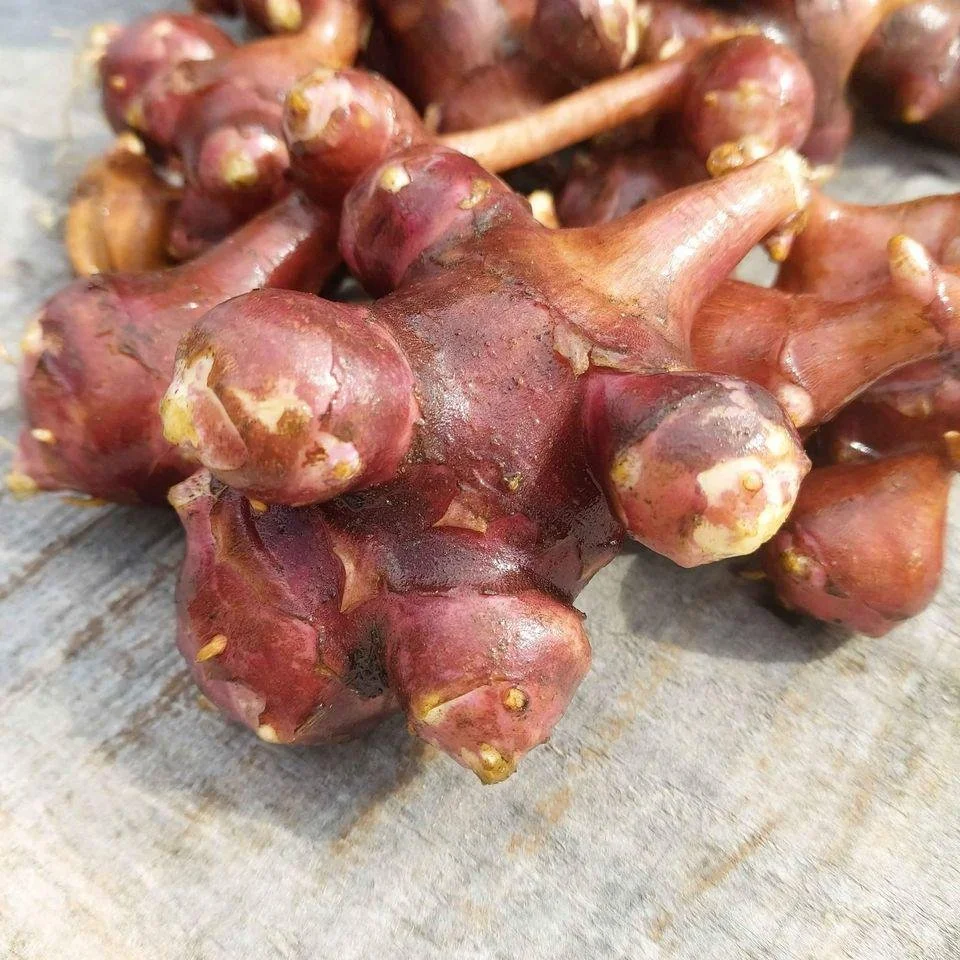 Image 2 of 3
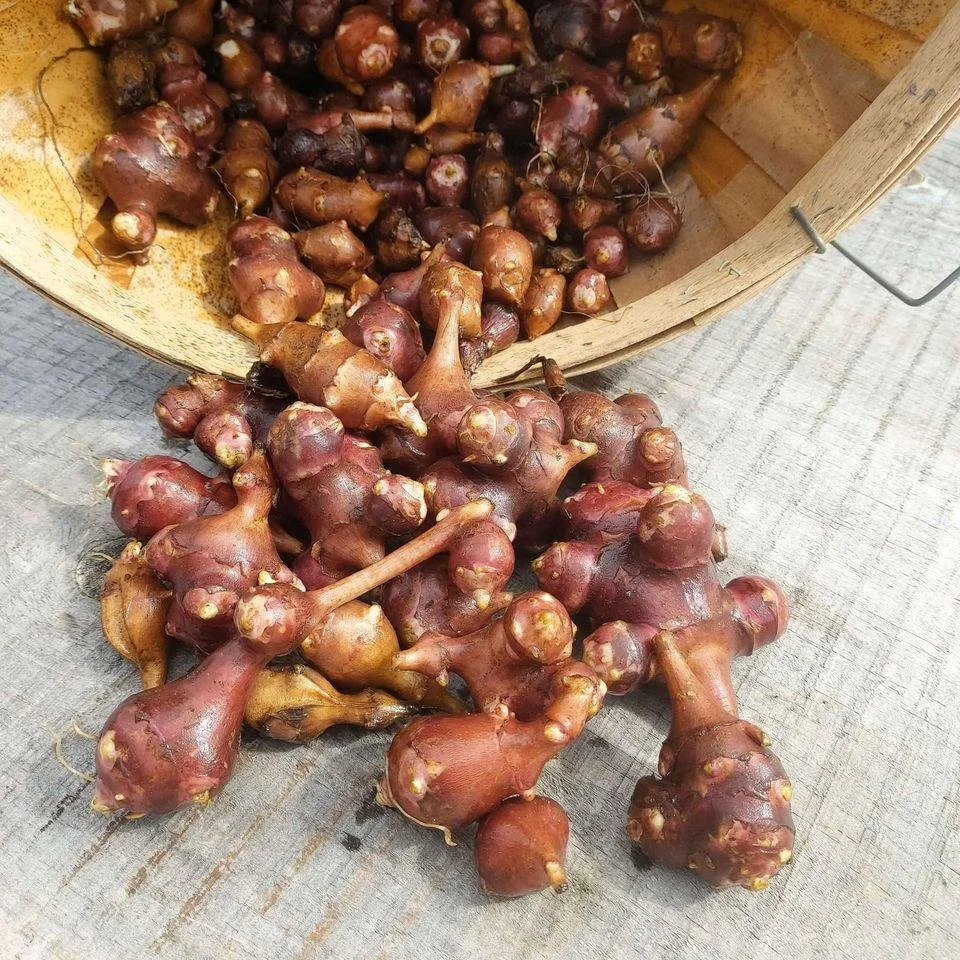 Image 3 of 3